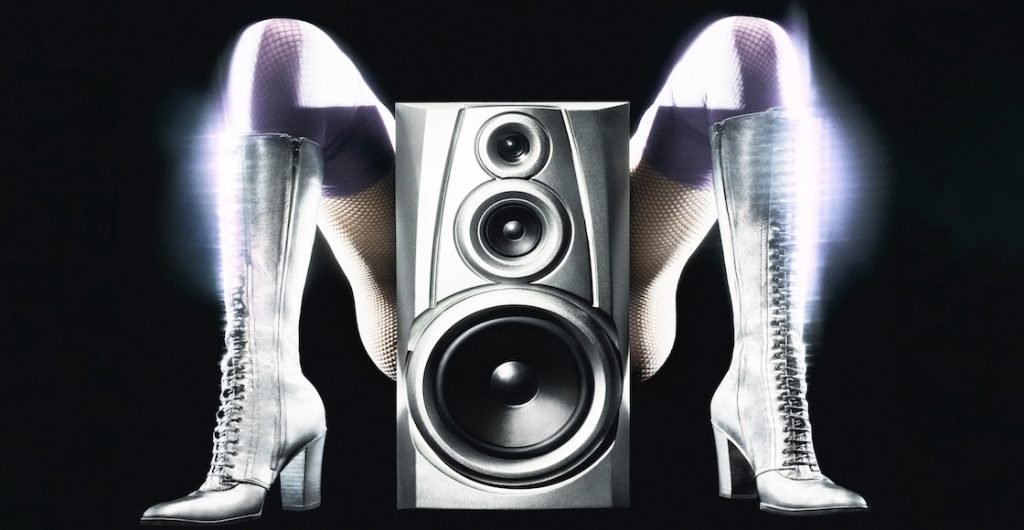
The most disposable pop star of the modern era just bet her comeback on the least disposable object in music. Sit with that for a second. Madonna, the artist who invented planned obsolescence for the self, who has burned and rebuilt her own image on a two-year cycle for four decades, released Confessions II today on Warner, and the format everyone is talking about is the one you can hold in your hands, scratch, lend, shelve, and leave to somebody in a will.
It is the long-awaited sequel to her 2005 album Confessions on a Dance Floor, the one she made with Stuart Price, the one that reset what a pop record could be at midlife. The new record reunites her with Price and features the singles “I Feel So Free” and “Bring Your Love” with Sabrina Carpenter. It is also arriving in a moment that says something I want to write about, which is that the most disposable artist of our era is selling the least disposable form of music we have.
The dance floor that taught pop how to age
Confessions on a Dance Floor is the record that proved a 47-year-old pop star could lead, and did. It won Madonna her first Grammy for Best Electronic/Dance Album and produced “Hung Up,” which sampled ABBA and went to number one in 41 countries. As The Guardian put it in its 20-year retrospective, the album reset the rules of pop midlife.
Context makes that comeback sharper. Confessions arrived two years after American Life, the most bruising commercial and critical stretch of her career, the moment the industry had quietly filed her under finished. Her response was to go back to the room where she started. Before the deals and the reinventions, Madonna was a Lower East Side club kid pressing the “Everybody” demo into DJs’ hands at Danceteria in 1982, and the first version of her that ever existed in public was a voice coming out of a club sound system. She knows the origin story still matters, because she just put it on the record: Confessions II includes a track called “Danceteria” that retells the whole night, the demo tape, the DJ booth, the friends who got her in the door. Confessions was a return to that origin, built as one continuous mix, sequenced the way a DJ builds a night, no dead air between tracks, because the room it was imagining had a mirror ball in it and four hundred strangers moving as one body. The album assumed a floor, and it assumed you would stay on it.
The architect was Stuart Price, the British DJ and producer who built the album as one continuous mix, a deliberate echo of the gay disco club tradition I write about in how the gay club built the pop you stream. The tour that followed became the highest-grossing tour by a female artist on record at the time, which settled the commercial argument. Bringing Price back for the sequel acknowledges that the chemistry produced one of her best records, and tries to make another.
A billion dollars of vinyl, in cash
In 2025, US vinyl sales crossed one billion dollars in revenue for the first time since 1983, per the RIAA. The Hollywood Reporter confirmed 46.8 million vinyl units sold against 29.5 million CDs, the average price of a new mint record at $37.22, up 24 percent since 2020. Taylor Swift moved 1.6 million vinyl units of The Life of a Showgirl in 2025 alone. Madonna’s release of Confessions II in 2026 is landing into a market where vinyl is no longer niche.
Think about what 1983 means in that sentence. The last time vinyl generated this much money, Madonna had exactly one album out. The format’s entire commercial death and resurrection fits inside a single career, hers, which is part of why she reads the moment better than the label statisticians do. She watched the record die. She watched the CD die. She watched the download die. She is now watching the stream flatten into wallpaper, and she has seen this part of the movie before, which is exactly the vantage point you want in the artist making the bet.
What an object does that a stream cannot
Streaming gave us infinite access. It also took something away. A record on a shelf is a decision. You bought it. You can lend it, you can hand it down, you can lose it. None of those are possible with a file you do not own. The vinyl boom is partly nostalgia and partly TikTok aesthetics, sure. It is also, more interestingly, a response to a culture in which we own nothing.
The object also has a social life the file will never have. Every record collection is an autobiography written in other people’s music, and everyone who grew up around one knows how the transmission works. The copy of an album with a relative’s handwriting on the sleeve. The one a friend never returned and you never forgave them for. The one you played for somebody at two in the morning because saying it out loud was harder. Streaming logs your listening. A shelf remembers your life. That difference is not sentimental garnish on the economics; it is the economics. People pay forty dollars for the version of a thing they can put a memory inside.
There is a second thing the object does, and it matters more for this record specifically. A vinyl album is attention technology. It plays in sequence. It makes you get up halfway through. It asks twenty minutes of your side of the bargain before intermission. That is a strange demand in 2026 and a perfect one for an album built as a continuous mix, because the format and the music are making the same argument: this is a whole, experienced in order, and the order is the art. You cannot shuffle a DJ set. Price and Madonna already knew that in 2005. The format finally caught back up to the thesis.
I write about the deeper economics of this in the forty-dollar record. The short version: when content becomes infinite, the artifact becomes the asset. A streaming playlist is the world’s library card. A record is your library.
The artist who keeps choosing the object
Madonna is the strangest case study for any of this because Madonna’s whole career is the case against permanence. Reinvention every two years, image first, sound second, the most ruthless career-management instinct in pop history. She is also the artist who has consistently insisted on the album as a unit. Confessions on a Dance Floor was a continuous mix. Ray of Light was a meditation suite. American Life was a manifesto. Her records have always been objects, built with edges and intentions, even when the market said the song was the only unit that mattered.
I made a longer version of this argument last month, in the piece on why Madonna outlasted every system built to replace her. The short version is that her durability was never about the image cycle. The images were the weather. The records were the climate. Strip away four decades of costume changes and what remains is a catalog of complete, deliberate, sequenced albums made by somebody who believed the long-playing record was a form worth mastering, even in the years the industry treated it as packaging.
There is something honest in that pairing. The artist of reinvention insisting on the artifact. The pop star who taught a generation how to package the self also taught us, by quiet example, that the package itself can have weight. Confessions II in 2026 is Madonna meeting that contradiction on the dance floor again. She has read the room. The room wants a record you can hold.
What this means for the rest of pop
If Confessions II works as a record and not just a release, the lesson for the rest of pop will be the one Madonna keeps teaching anyway. Make the album. Make it the way an album wants to be made. Trust that the audience that buys the object is the audience that will still be listening in ten years, because they are the ones who marked the purchase in their own lives, put it on a shelf, and gave it a place to wait for them.
The industry will draw the shallow lesson first, because it always does. Expect a wave of “vinyl-first” marketing plans, deluxe variants in six colorways, scarcity theater aimed at the collector chart. That is the packaging read, and it will burn out the way gimmicks do. The deeper read is the one sitting in the grooves: the object economy rewards artists who make complete things, and punishes the ones who make content. Streaming is the radio. The vinyl is the record collection. Both can exist. Only one of them lasts.