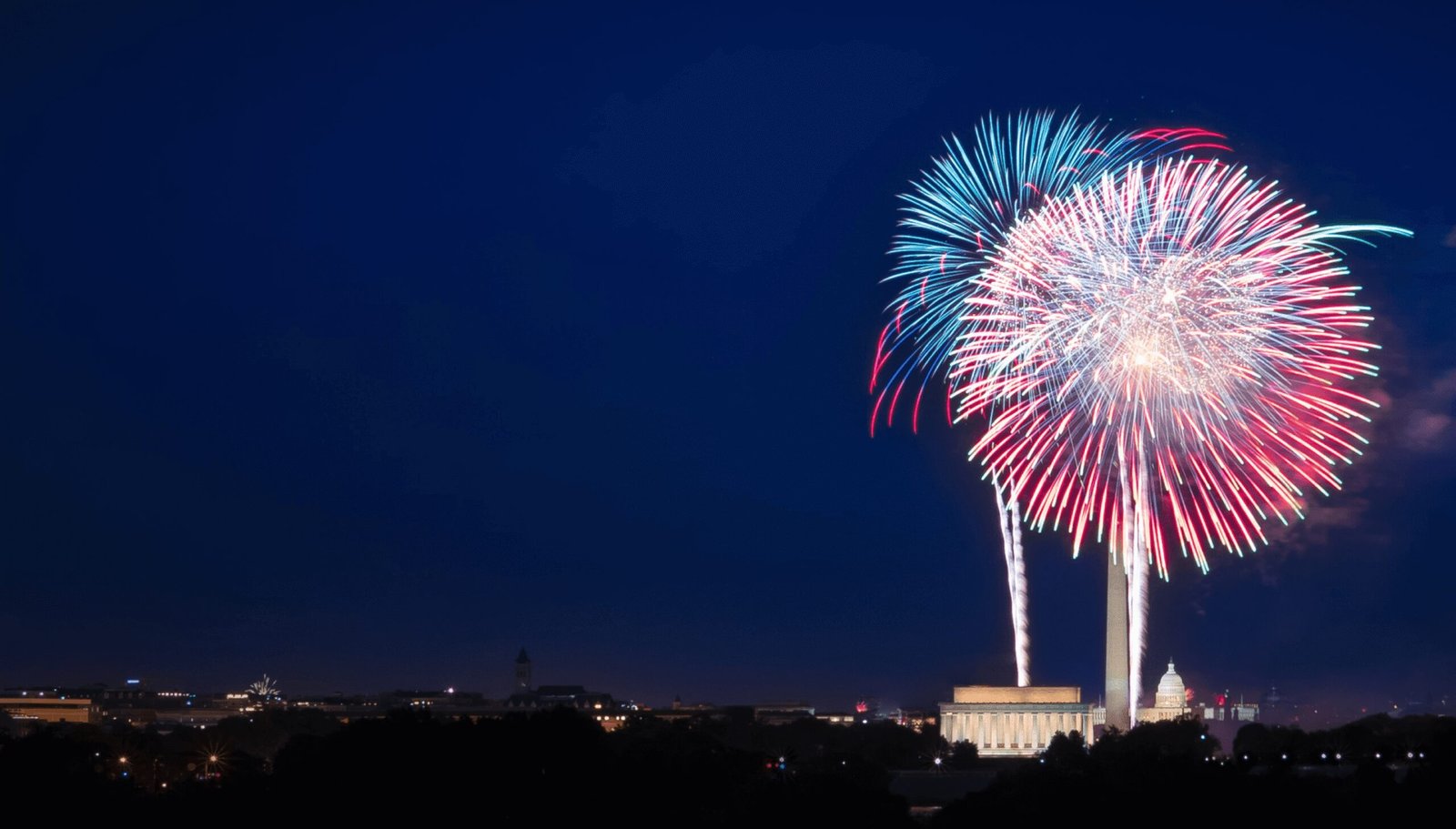
By July there will be parades. There will be a Smithsonian exhibit and a Treasury coin and a thirty-second spot during the All-Star Game and an open-air concert on the National Mall where someone reads the Declaration aloud while a brass section finds the seam between “patriotic” and “neutral.” This is the official version of the 250th anniversary of the United States, a year of continuity, of stewardship, of we have always been this and we will always be this.
The men we are being asked to revere would have found that framing ridiculous.
The founders wrote down their doubts
In 1789, Thomas Jefferson sat down and wrote to James Madison that “the earth belongs in usufruct to the living”, that no constitution, no law, no inherited arrangement should bind a generation that didn’t vote on it. He calculated, with the morbid Enlightenment precision they all loved, that this meant a constitution should naturally expire every nineteen years, and that “if it be enforced longer, it is an act of force, and not of right.” He didn’t write it once. He wrote it more than once. He meant it.
Madison wrote back to talk him down, but only partway, conceding that the earth belongs to the living while arguing the improvements of the dead form a debt the living inherit. The two of them argued for the rest of their lives about how often the country would need to be re-ratified, never about whether it would. They assumed re-ratification the way we assume software updates. They built it in. They put the amendment mechanics in the document on purpose. They held a Constitutional Convention to replace the Articles of Confederation before the ink on the Articles was dry. The founders did not believe in permanent foundings. They had just gotten done overthrowing one.
The mythology came later
The thing we now call “the founding”, capital F, sacred, finished, is a nineteenth-century invention, polished in the twentieth, weaponized in the twenty-first. The founders themselves were a faction inside a faction inside a war, and they argued through every clause. The three-fifths compromise was a known concession to slaveholders, written about in letters as a moral injury Madison thought might sink the country in his lifetime. The Senate was a sop to small states that nobody pretended was democratic. The Electoral College was a fix for slaveholder math. Read Madison’s own convention notes. They are not the work of men who thought they were writing scripture. They are the work of men who thought they were buying time.
We turned the time-buying into a religion. The 250th is the religion’s high holy day.
What the anniversary flattens
The semiquincentennial branding has a tone problem and it isn’t an accident. The tone is unity. The tone is we agree on what this country is and we always have, with a brass section. To hold that tone, the official version of 1776 has to lose the parts where Black Americans were three-fifths of a person, where women were nobody’s idea of a citizen, where Native nations were treated as obstacles to be cleared off the map, where the men with quills in the room knew all of this and signed anyway because they thought refusing to sign would be worse. The tone is also losing John Adams’s actual diary, which is the diary of a man who suspected from the second week that the project was probably doomed, and Patrick Henry’s actual late-life letters, which read like an old radical watching his work get domesticated in real time.
You cannot get to clean continuity from those letters. The branding gets there by not reading them.
Consider the amendment mechanism itself, the part of the document the founders were proudest of. They wrote Article V because they expected the thing to be edited, often, by people not yet born. For the first century and a half, the country obliged: seventeen amendments after the Bill of Rights, including three that rewrote the relationship between the citizen and the state after a civil war. And then, roughly within living memory, we stopped. The last substantive amendment was ratified in 1971; the one after that, a stray clause about congressional pay, had been sitting around since 1789. A country that hasn’t meaningfully amended its constitution in over half a century isn’t honoring the framers’ design; it’s ignoring the one instruction they were most insistent about.
John Adams is the tell. Read his diary and his letters and you find a man who spent the Revolution half-convinced it would fail, who wrote that the new government was “calculated only for a moral and religious people” and “wholly inadequate to the government of any other,” which is not the sentence of someone who believed he was building a machine that would run itself for three centuries. The founders were anxious, hedging, provisional people. They signed documents they expected to be revised because the alternative, in the room, was no document at all. We have taken their nervous compromises and recast them as serene certainties, which is the one reading of the founding the founders themselves would not recognize.
What honoring the founding would actually look like
The honest version of the 250th is harder to put on a coin. It looks like funding the humanities departments that teach undergraduates how to read a primary source. It looks like a K–12 civics curriculum that walks students through what was actually argued at the convention, not what was carved on the monument afterward. It looks like letting historians do their jobs without state legislatures threatening their funding. It looks like a country willing to treat itself as provisional, because the men who wrote it down assumed every generation would have to argue it out again, and ours has not yet started.
And it looks like telling the harder story in public, the one with the three-fifths clause and the Trail of Tears and the century of coverture left in. The point isn’t to make anyone ashamed of the country. A myth you cannot question stops being a heritage; it becomes a loyalty test. The founders were perfectly comfortable questioning their own work; the discomfort is entirely ours. A 250th anniversary confident enough to read its own founding documents in full, contradictions and all, would be a more genuinely patriotic event than any parade that depends on the audience not having read them.
The cleanest way to honor the founders this July is to take them at their word. They told us this wasn’t finished. They told us it was ours to remake. They built the door and walked us to it. We have spent two hundred and fifty years standing in front of the door, holding a sparkler, telling each other how beautiful the door is. We have admired the hinges. We have memorized the inscription. We have done everything except the one thing the builders actually asked of us.
The door opens.