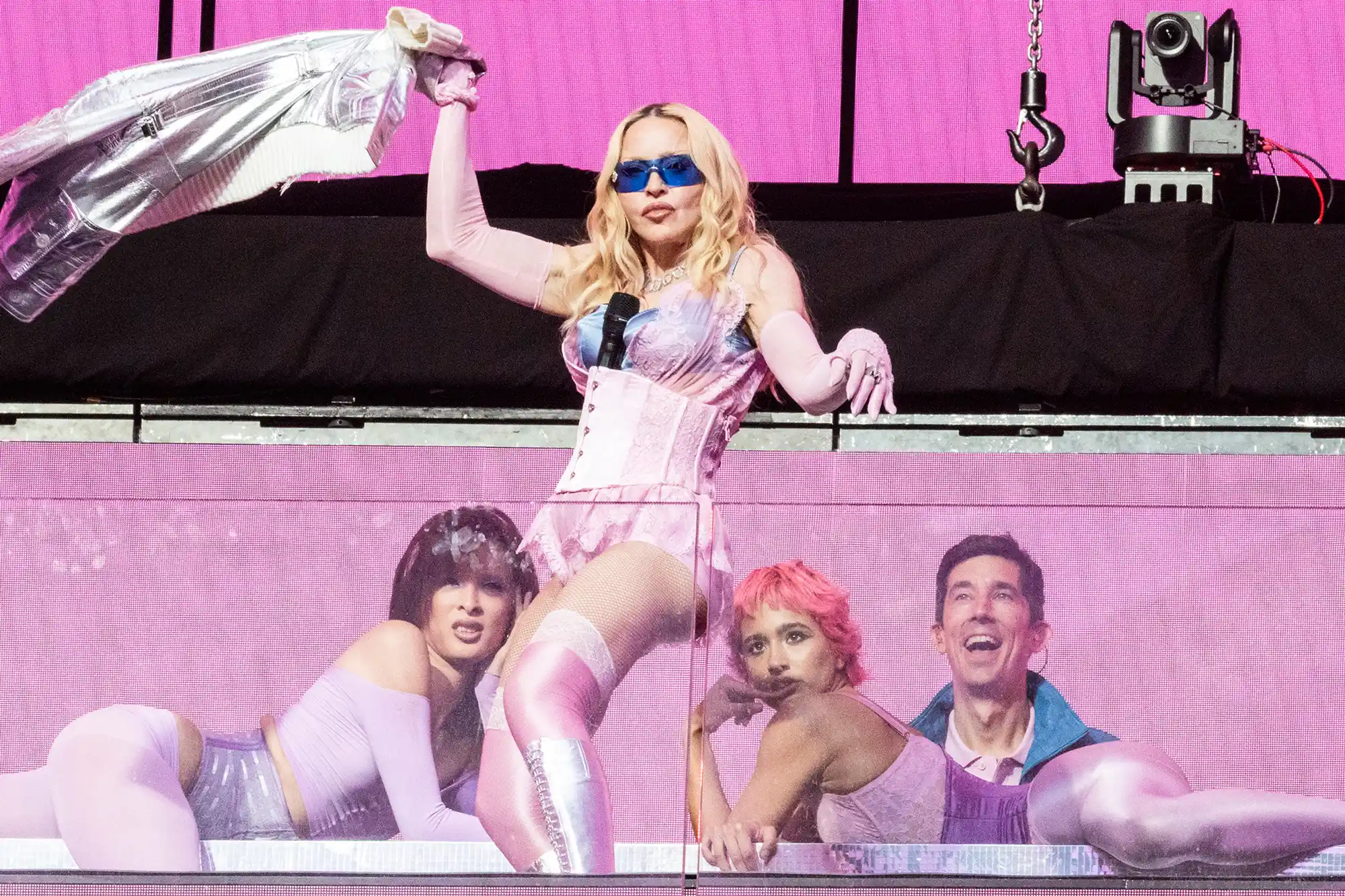
The Madonna conversation in 2026 is almost entirely the wrong conversation. It is about her face. It is about whether she is still relevant. It is about whether her last album charted. It is structured, as the Madonna conversation has been structured for forty years, as a referendum on whether she should still be allowed to be in the room.
I want to argue the only Madonna question that matters: she is still here. That is the legacy. Everything else is footnote.
The years nobody wants to remember
Between roughly 1985 and 1995, the United States government decided, as a matter of policy, that it would prefer for a generation of gay men to die quietly. The president would not say the name of the disease for years. The FDA dragged on every drug approval. Funding was a punchline at White House correspondents’ dinners. Ministers preached that what was happening was deserved. Parents were not picking up the phone. As one retrospective put it, the average citizen still believed AIDS was a curse God had handed the gay community, and schools, media, and churches stayed as far from the subject as they could get.
Madonna was a pop star. A pop star does not have to do anything about a public health crisis. The job description is: sell records. She had the biggest career in the world at the moment, and the safest commercial move available to her was the move every other major pop star at her tier was making, which was silence.
She didn’t make that move. She named what was happening from arena stages. She slipped a “Facts About AIDS” insert inside the sleeve of 1989’s Like a Prayer at a time when the word “condom” was, somehow, controversial on network television. She built tours around dancers who were openly queer in 1990, which was not a thing pop stars at her scale did, and with “Vogue” she put a Black and Latino queer ballroom culture on MTV in front of an audience that, in many cases, had been raised to believe the people inside that culture were not entitled to a song. The National AIDS Trust has since credited her as the one celebrity who actually reached young people with safer-sex information they were getting nowhere else.
You can argue with how she did it. You can argue, fairly, that she took more than she gave back, that the appropriation conversations she launched are still going on, that being the face of someone else’s culture is a complicated favor. The critique is real and worth keeping: “Vogue” brought the dance into the mainstream without crediting the Black and Brown ballroom community that invented it, and many of the people who built that scene died in poverty while the song went platinum. All of that is true. Hold it in one hand. In the other hand, hold the body count of the years she was doing it.
It is easy, from 2026, to underrate how much nerve that took. A safer-sex card in a major-label record sleeve in 1989 was not a marketing gimmick; it was a commercial risk that could have ended her at the box office and on radio, in a country whose own president had spent most of the decade refusing to say the word AIDS out loud. She did it anyway, and she kept doing it. Years into the crisis she was still turning arena shows into memorials, projecting the faces of the people she had lost during “Live to Tell” until the individual portraits dissolved into the millions the epidemic took. Press releases don’t do that. What she did was use the biggest stage on earth to make a grieving community visible to an audience that had been trained to look away.
And visibility, in those years, wasn’t a soft thing; it was the whole fight. Being seen was the difference between a disease the government could ignore and a crisis it could be shamed into naming. Every time she pulled queer life and queer death into the center of the most-watched pop career on the planet, she made the cost of looking away a little higher for everyone watching. You do not have to call that heroism to call it useful. It kept the subject alive in living rooms that had decided the subject was over. And it modeled, for every artist who came after, that a platform is a thing you can spend rather than just sit on, that fame is only worth what you are willing to risk with it.
The cost of being first
The reads Madonna takes in 2026, about her face, her age, her body, her refusal to retire on schedule, are descended in a straight line from the reads she took in 1989 for the “Like a Prayer” video, for the Pepsi commercial that got pulled, for kissing a Black saint on camera, for being a woman who didn’t sit down when she was supposed to. The machine is the same. The target is the same. The vocabulary has gotten more polite and the underlying complaint hasn’t.
Being first is expensive. The cost is being read for the rest of your life by people who will never admit that the things they now take for granted were things you bled to make ordinary. Madonna paid that bill and is still paying it. She is also still onstage.
She is not a saint
Nothing in this piece requires you to think Madonna is a good person. I don’t even know what that would mean about a pop star. She has been clumsy. She has been entitled. She has, periodically, been embarrassing. She has made art that hasn’t aged well and statements that aged poorly within the week. The Madonna defense is not a Madonna canonization. Queer survival is not a story about saints. It has never been a story about saints. It has always been a story about who showed up, what they did while they were there, and whether they kept showing up after the cameras moved on.
She kept showing up. That is the bar. It was always the bar.
The metric that matters
Here is the only Madonna stat I care about. In 2026 she is still touring, and a generation of queer fans who were not statistically supposed to make it to 2026 either are still in the audience. Some of them are there because of her directly, because they saw something on a stage in 1990 that told them they were allowed to exist in public. Some of them are there because of the people she platformed, who platformed other people, who platformed them. The chain is real. You can trace it.
The Queen of Pop is a queen. The queens she was talking about, the ones the country was willing to let die, a lot of them are still here. That is what her longevity means. Not the streaming numbers. Not the tour grosses. Not the face. The fact that we are also still here, and that some nonzero portion of we are still here runs through her, is the legacy.
Happy Pride. Buy the ticket. She earned it. So did you.