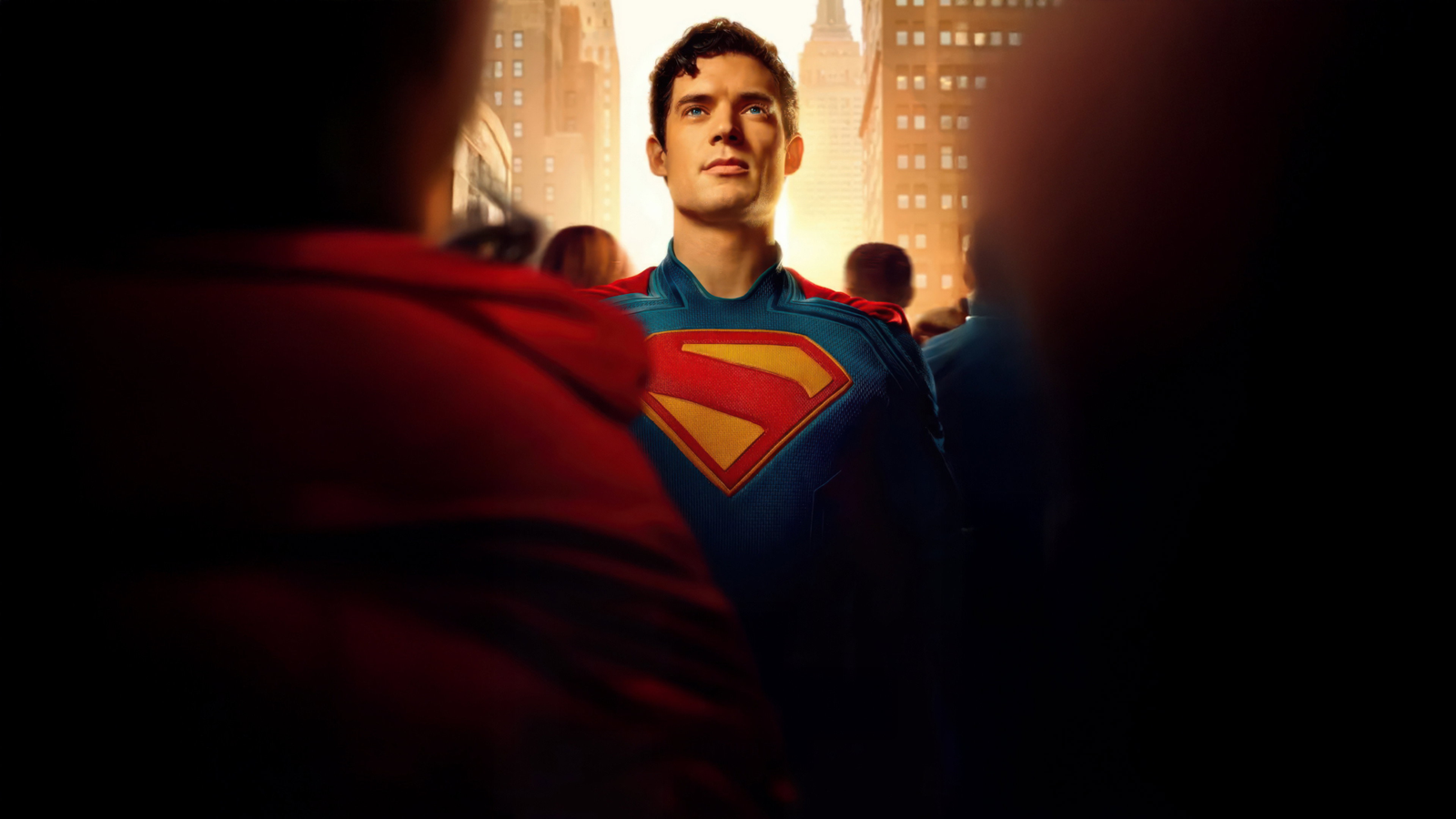
Last summer’s Superman opens with Clark losing a fight. He stumbles into the Arctic on his hands and knees, bleeding through his suit, the dog dragging him by the cape. It is the first shot of the movie and it is the entire movie. Before the hero rallies, before the third-act fistfight, before the marketing department gets the still it can put on a bus stop in Sherman Oaks, James Gunn shows you a Superman who is small, exhausted, and saved by something kinder than he is. He gets up because someone else carries him.
You are not supposed to be able to summarize a superhero movie in one sentence. This one you can. It is a movie about whether the most powerful person in the room is willing to stand between the unprotected and the people who want to hurt them. The film answers that question yes. It answers it loudly. It answers it on purpose. And the predictable wing of the commentariat has been screaming about it for eleven months.
The “woke Superman” backlash gave away the game
You remember the cycle. The trailer drops. Gunn does a press interview where he describes Superman as “the story of America. An immigrant that came from other places”. Half the internet says yes, obviously, that has been the premise since 1938. The other half spends two weeks explaining that Superman is actually an American story about Kansas wheat fields, and how dare anyone import politics into it. Fox News ran a chyron calling the movie “Superwoke,” and a former screen Superman went on camera to predict the comment would sink the box office.
The thing about that argument is that it requires you to have not read a Superman comic, watched a Superman movie, or thought for forty consecutive seconds about who Clark Kent is. Kal-El is a refugee whose home was destroyed. He is taken in by farmers who decide, without asking permission from anyone, that the kid in the field is theirs now. He grows up to spend his entire professional life protecting people the powerful would prefer to crush. He has worn the cape for eighty-seven years. He has been an immigrant the whole time. This is not a reading I am importing; it is the one the character’s own custodians keep volunteering. DC Comics marked World Refugee Day in 2019 by calling Superman “the ultimate example of a refugee who makes his new home better,” and the activists behind the 2013 Superman Is an Immigrant campaign have pointed out for years that the Man of Steel “has been an ‘illegal alien’ for 87 years.”
So when the same crowd that spent 2025 cheering ICE raids in Los Angeles got online to insist the immigrant framing was a betrayal of the character, they were making less a textual argument than a confession. The reason “Superman is an immigrant” reads as a political provocation in 2026 is because they have spent the last year insisting immigrants are not people Superman would save. They are correct that the film disagrees with them. The film disagrees with them on purpose. Gunn, for his part, refused to flinch: he told reporters at the premiere that the movie is for “everybody” and that he had nothing to say to anybody spreading hate about it, while his brother Sean put it more bluntly: people who say no to immigrants are against the American way.
What the film actually does, scene by scene
The reason the discourse has been so sour is that the movie refuses to leave the metaphor at metaphor. It commits. The Boravian-Jarhanpurian conflict is plainly Gaza-coded, a vastly more militarized nation rolling tanks across a border in a campaign the rest of the world’s powerful nations decline to interrupt. Superman intervenes anyway. He is told, repeatedly, that he is not allowed to. He is told the United States government has a position on it and his position needs to align. He says no. He flies the wounded out of the rubble. He puts his body between a tank and a child.
This is not subtext. There is no subtext. The film does not believe in subtext. Lex Luthor, the richest man in the world, with a private army, a black-site prison in a pocket dimension, and a media operation that manufactures consent for whichever atrocity is on the menu, is the villain. The film calls a billionaire what he is, on screen, with his name on the side of a building. When was the last time a tentpole studio release did that?
And then there is the Daily Planet. The newsroom subplot is the part of the movie no one warned me about. Lois Lane writes the article. Lex Luthor tries to kill the story. Perry White prints it anyway. It is forty minutes of a major studio release arguing, with a straight face, that journalism is the thing that saves the country from the people who own the country. In a year when half the press has been bullied into anticipatory obedience, that sequence plays like a manifesto.
The “apolitical superhero” was always a lie
The honest version of the complaint is not “Superman shouldn’t be political.” The honest version is “Superman shouldn’t be political against me.” Which is the only kind of political the character has ever been. He punched Nazis in 1940. He fought corrupt landlords in the original Siegel-and-Shuster run. He took on a fictional senator modeled on Joe McCarthy in the 1950s. He has spent eight decades being political in exactly the direction that makes a certain kind of viewer uncomfortable, and that direction has always been: the unprotected come first. It is worth remembering that Siegel and Shuster were themselves the sons of Jewish immigrants, building, in 1938, the wish-fulfillment fantasy of a powerless people: a strongman who uses his power to shield the vulnerable rather than to dominate them. As the Pulitzer-winning journalist Jose Antonio Vargas and his co-author argued in The Hollywood Reporter, accusing Gunn of politicizing Superman “comes laughably late, as the world’s most famous superhero has always been political.”
What is new is not the politics of Superman. What is new is that a meaningful share of the audience has decided, openly, that the unprotected are the enemy. When a film says that immigrants are people, and a substantial group of viewers reads that as a partisan attack, the partisanship is not in the film. And the market answered the panic on its own terms: the supposedly box-office-poisoning “Superwoke” movie crossed $400 million worldwide while the people who promised audiences would reject it kept explaining why the audiences were wrong.
What pop culture is for, right now
I write for studios and networks for a living. I am the person they pay to figure out what a campaign can get away with saying. So I want to be precise about this: Superman matters in 2026 because of the cowardly stance it refused to take, not the brave one it’s getting credit for. It refused the easy out. It refused the “Superman is for all of us” sentence that means nothing because it commits to nothing.
It said, instead: Superman is for the people you are trying to deport. Superman is for the kids in Gaza. Superman is for the trans kid in Tennessee whose state legislature spent the spring passing laws about her body. Superman is for the librarian in Iowa who got death threats for shelving a graphic novel. And then it shot a scene where he stands in front of all of them, takes the hit, and gets up.
You can argue with the film. You cannot argue that the film didn’t pick a side. The people screaming loudest about it are screaming because they know exactly which side it picked, and they know they’re on the other one.
That is what art is supposed to do. That is what a Superman movie is for. The character has always been a promise: the most powerful person in the room will stand between you and the people who want to hurt you. The 2025 film is the first one in a long time that remembered the promise was the whole job.
The next one had better remember too.