I want you to do one thing before you read anything else about the new wave of anti-drag legislation in this country. I want you to read the bills.
Not the headlines. Not the press conferences. The actual statutory text. Pull up Tennessee SB3, the 2023 bill that started the cascade. Pull up the Florida copycat, the Texas copycat, the Montana version, the Arkansas one, the Ohio version that just cleared committee in March. Read what the words say.
You will notice two things very quickly.
The first thing is that almost none of these bills use the word “drag.” They define a regulated category, “adult cabaret performance,” “adult-oriented performance,” “sexually explicit conduct”, and then they write that definition wide enough to include any performance featuring a “male or female impersonator” in a public space where a minor could conceivably be present. The word “drag” shows up in the press release. It does not show up in the statute. The statute is broader on purpose.
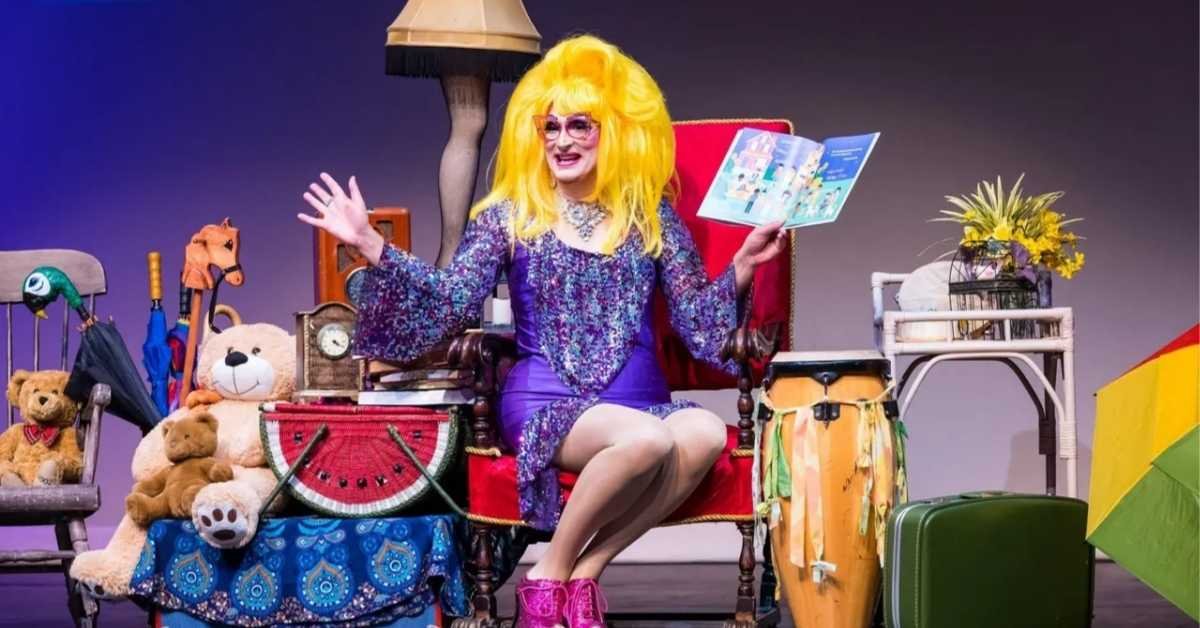
The second thing is that the venues these laws apply to are not the venues you think they are. A 21+ drag bar with a doorman is fine. A private event at a private venue is fine. The places these statutes reach, the places they were written to reach, are libraries, public parks, school events, pride festivals on public sidewalks, all-ages community spaces, and bookstores. The bills criminalize a performance in front of a child. The performances they had in mind, when they sat down to draft, were Drag Queen Story Hour at the public library.
What “protecting children” actually targets
The American Library Association has documented a historic surge in attempts to censor library materials, with the most-challenged titles year after year dominated by books about LGBTQ+ people and people of color. The titles being pulled are not a mystery. They are not random. Gender Queer, All Boys Aren’t Blue, Lawn Boy, The Bluest Eye, Beyond Magenta, Flamer. Books by queer authors. Books by Black authors. Books that include any acknowledgment that queer kids and Black kids exist and have inner lives. The drag bills and the book bans are not parallel campaigns. They are the same campaign with two different attack surfaces.
The drag bill criminalizes the librarian who hosts a story hour. The book-challenge regime criminalizes the librarian who keeps the book on the shelf. The two together make it functionally impossible for a public library to do the thing public libraries are for, which is to be a place where a kid can encounter something true about other people, and themselves, that the adults around them might not yet be ready to admit.
That is the point. That has always been the point.
The chilling effect is doing more than the law
Most of these statutes will not survive constitutional review on the merits. The Tennessee bill was struck down on First Amendment grounds in June 2023, by a federal judge who happened to be a Trump appointee, and who called the law unconstitutionally overbroad and “passed for the impermissible purpose of chilling constitutionally-protected speech.” A year later the Sixth Circuit put the law back on the books without ever defending it on the merits: it ruled the theater company that sued lacked standing, leaving the constitutional question pointedly unanswered. The legal scoreboard, on the substance, is mostly losses for the people who wrote the bills.
The legal scoreboard, however, is not where this fight is being fought. The fight is being fought in the inbox of every public library director who now has to weigh a story-hour invitation against the prospect of her board getting harassed for six months. It is being fought in the calendar of every Pride committee in a county where a single school-board member can call the sheriff. It is being fought in the staffing budget of every community center that used to host a drag brunch on Sundays and now hosts trivia, because the insurance got too expensive.
Even when the bills lose in court, they win in the calendar. That is the design. The Washington Post noted that the Tennessee statute was struck the same week as a Pride celebration it had been timed to chill, and the chilling is the product, not a side effect. The cancellations happen before the injunction. Pride parade routes get shortened. Story hours get quietly pulled from the library schedule. The bookstore that used to do a midnight release for the new Casey McQuiston decides this year they’ll just take pre-orders. The performances disappear, and so do the rooms where they used to happen.
Who actually shows up to a drag story hour
I want to tell you about one of these events. Not because I think the answer to a smear campaign is to put nice people in front of it, that strategy has lost everywhere it has been tried, but because the gap between what these events are and what they have been turned into in the political imagination is, at this point, the central fact of the discourse.
The one I went to in Columbus a few years back had maybe forty kids. There were two queens. They read Julián Is a Mermaid and The Hips on the Drag Queen Go Swish, Swish, Swish. There was a craft table. There was juice. The whole thing was forty-five minutes. The kids loved it. The parents loved it. There was a six-year-old in a homemade Maleficent costume who refused to take her crown off for the entire reading.
That is the event the laws are written about. That is what twenty-one state legislatures have decided to criminalize. The performance of reading a picture book to a kid in a wig and a dress. It does not become more disturbing the closer you look at it. It becomes less.
What to do, if you are inclined to do something
The most useful thing you can do is local and unglamorous. Show up to your school board meeting. Show up to your library board meeting. The far right figured out in the late 2010s that nobody else was paying attention to those rooms, and they have been quietly stacking them ever since. The rooms are still mostly empty. They are also where the books get pulled. They are where the story hours get cancelled. They are where the librarians get fired.
The other thing, and I say this as a person whose entire job is to argue that words matter, is to stop accepting the framing. The bills are not about children. The bills are about the rooms where queer adults and queer kids and the people who love them are allowed to be in public together. If we keep arguing about whether the story hour is age-appropriate, we have already lost the argument. The story hour was never the point. The library was.
A free society is, in the end, just a set of rooms where people are allowed to gather without permission: the library, the park, the bookstore, the union hall, the sidewalk where the parade goes by. Take away the rooms and the freedom becomes theoretical, a thing you have on paper and nowhere to practice. The drag panic is a fight over who is allowed to occupy public space, and that is a much older fight than any story hour.
Defend the library. Defend the librarian. Defend the room.